


AI and Customer Experience: When Automation Forgets the Customer
Every bank and credit union I talk to is figuring out where AI and automation fit. The early excitement is usually about what the technology can do. The question I always bring to the table is simpler: what is it acting on, and can you trust it?
I just got a front-row seat to what happens when that question gets skipped. It wasn’t at a bank. It was at a hotel, which made it funny instead of costly. Here’s what four days of automated messages taught me, and the questions I’d ask before any agent talks to your customers.
The hotel was excited to see me on the wrong day
My company booked me at a hotel in San Diego for a work trip. I also booked the weekend before for a kid-free getaway with my husband. Then life started lifing, and I canceled the weekend more than three weeks ahead of time.
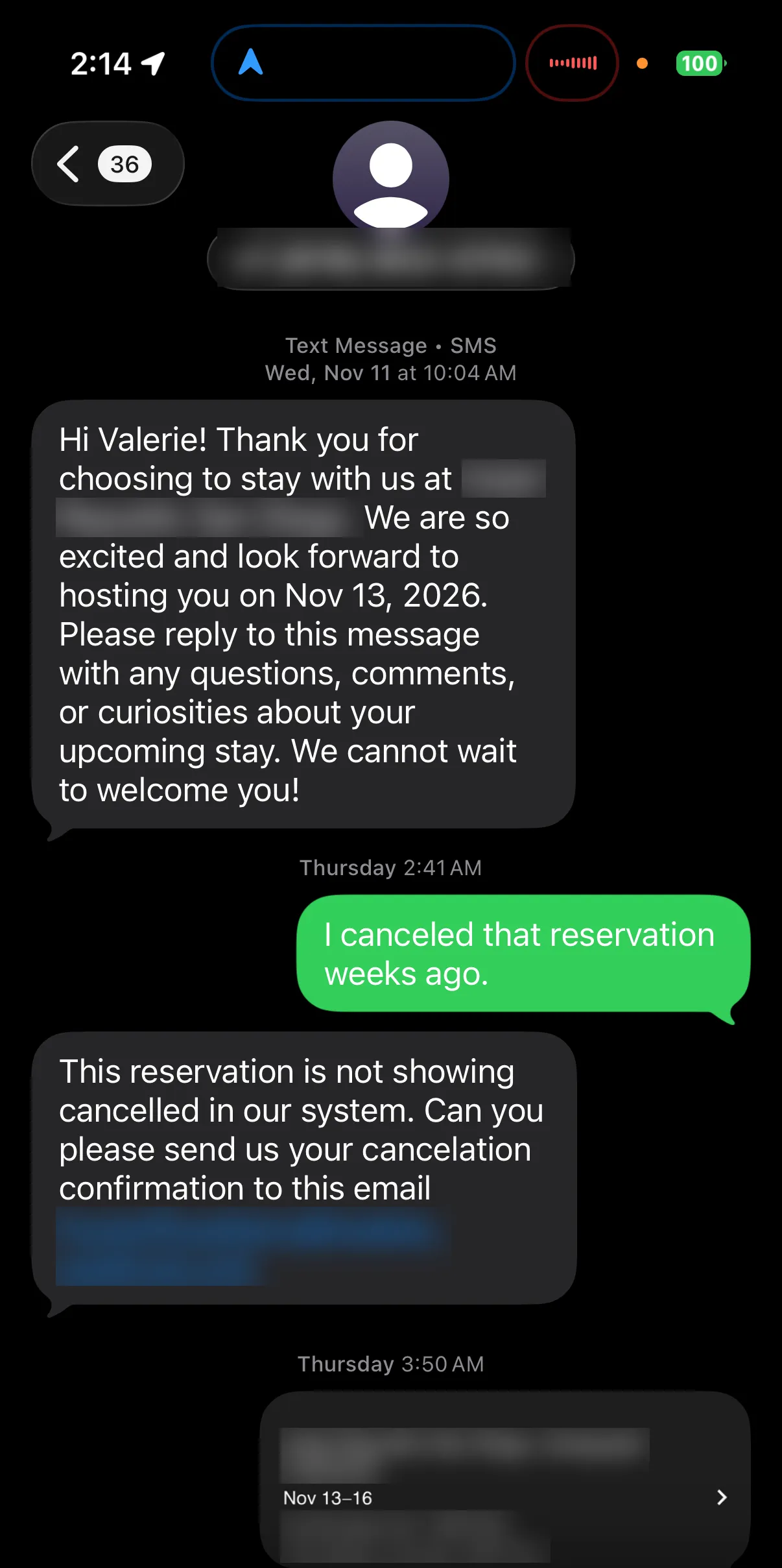
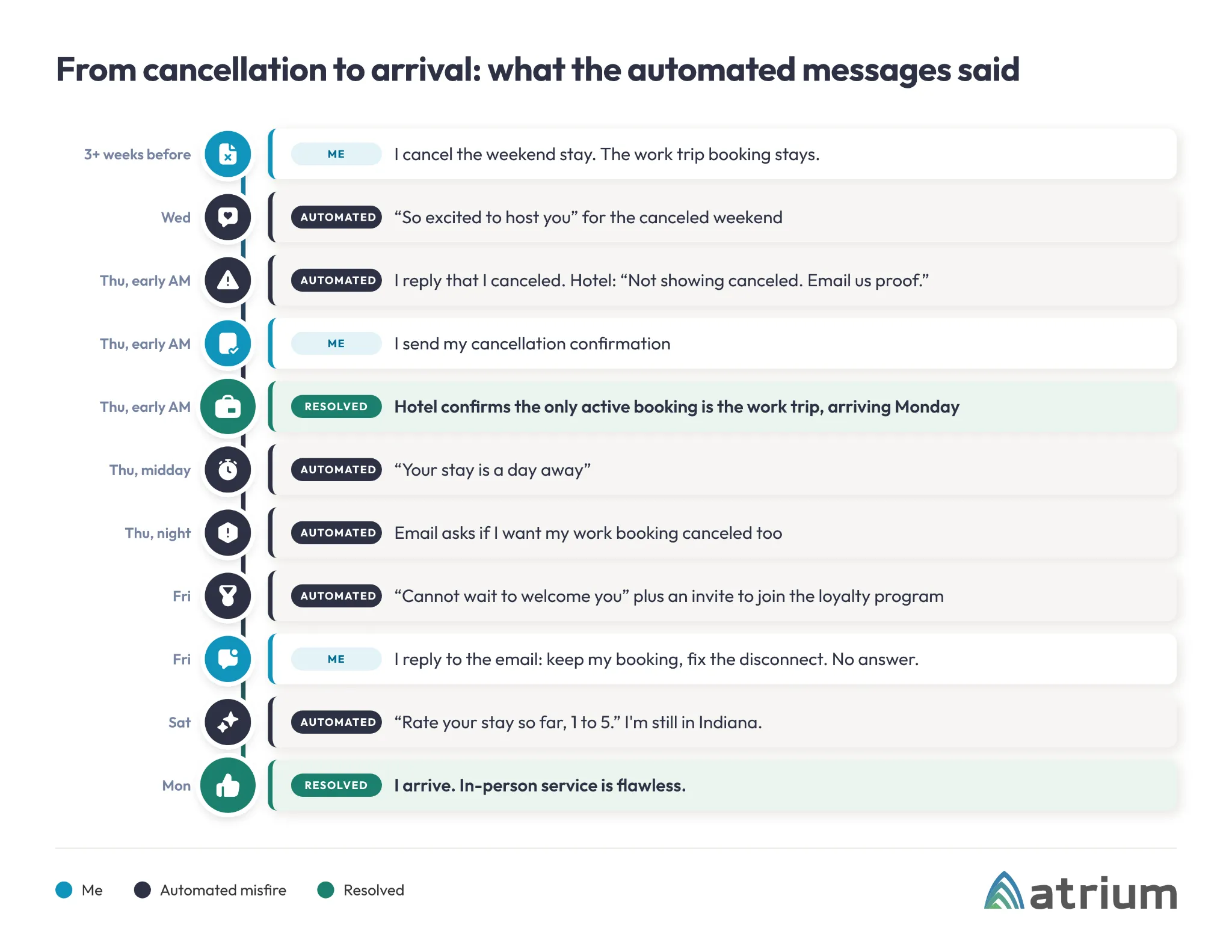
Apparently nobody told the workflow sending the automated text messages. On Wednesday, my hotel let me know they were “so excited” to see me on Friday. I could have deleted it. Honestly, that would have been the “normal” thing to do. But I was curious how it would play out, so I replied. Then I posted about it on LinkedIn, and at least one of you wanted to know how it ended. Much to my surprise, it got worse.
Every automated touchpoint missed
I replied that I’d canceled weeks ago. The answer came back fast: the reservation wasn’t showing as canceled in their system, so could I please email proof? The error was in their system, but the burden of proof had shifted to me. Luckily, I had the receipts, and I sent my cancellation number that night.
Their next text said they didn’t have that reservation active after all. The only booking they could find was my work trip arriving Monday, which was exactly the one I wanted. I figured we were done.
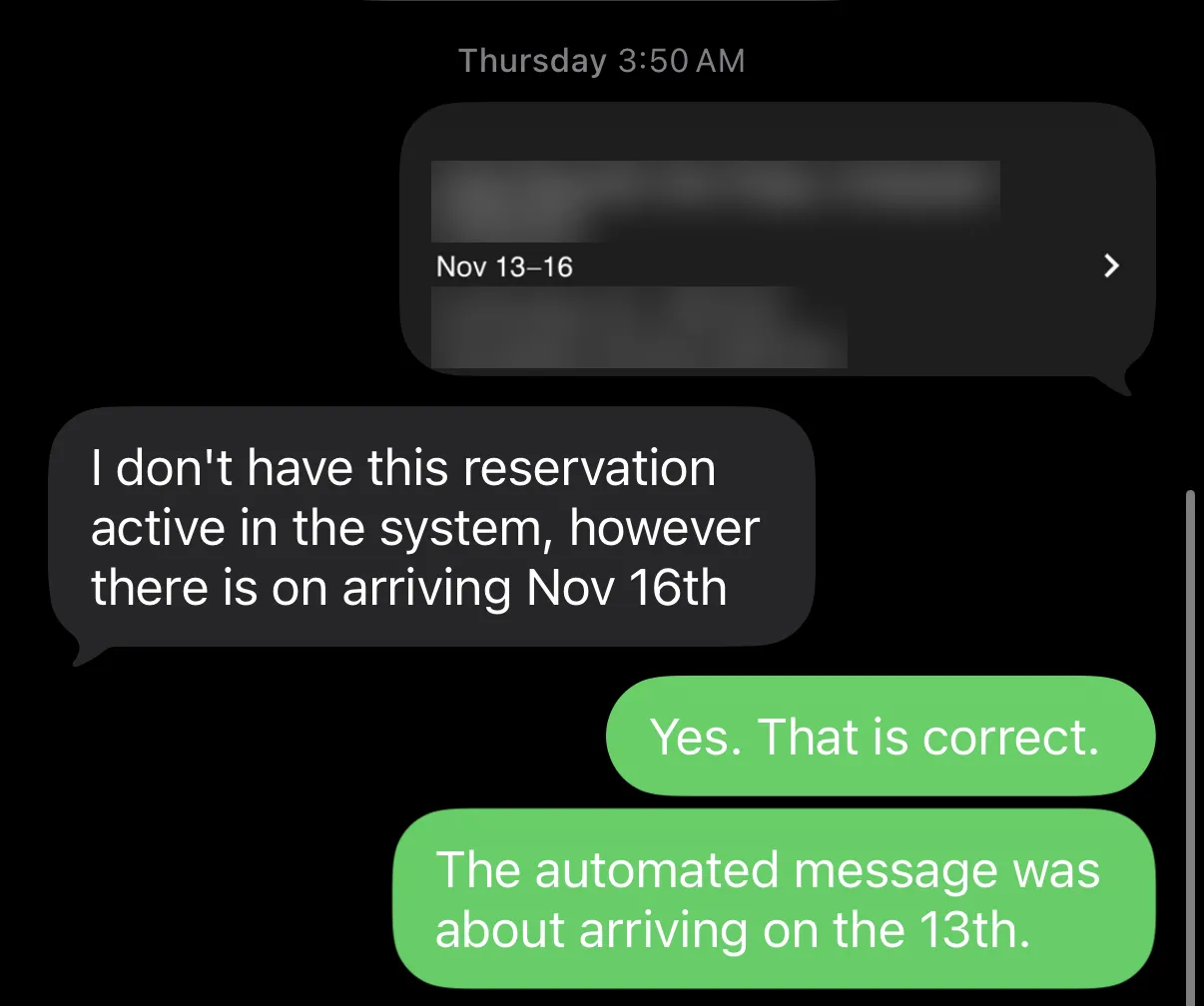
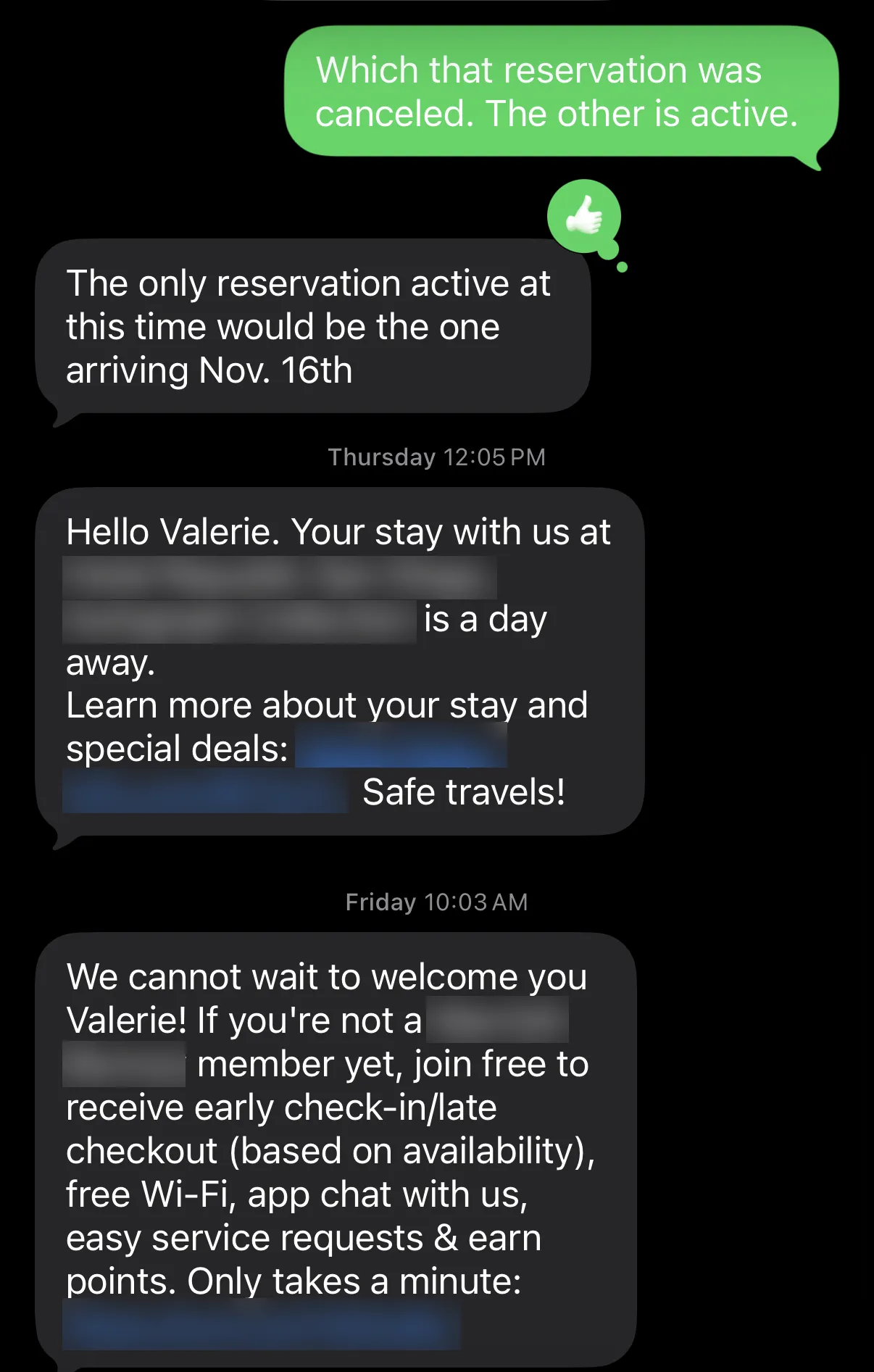
Except we weren’t. That same day, another text: “Your stay is a day away.” They were still welcoming me for Friday. We had just established, in writing, in that same thread, that I wasn’t coming until Monday. The person answering my texts had the right information. The system sending them never got the update.
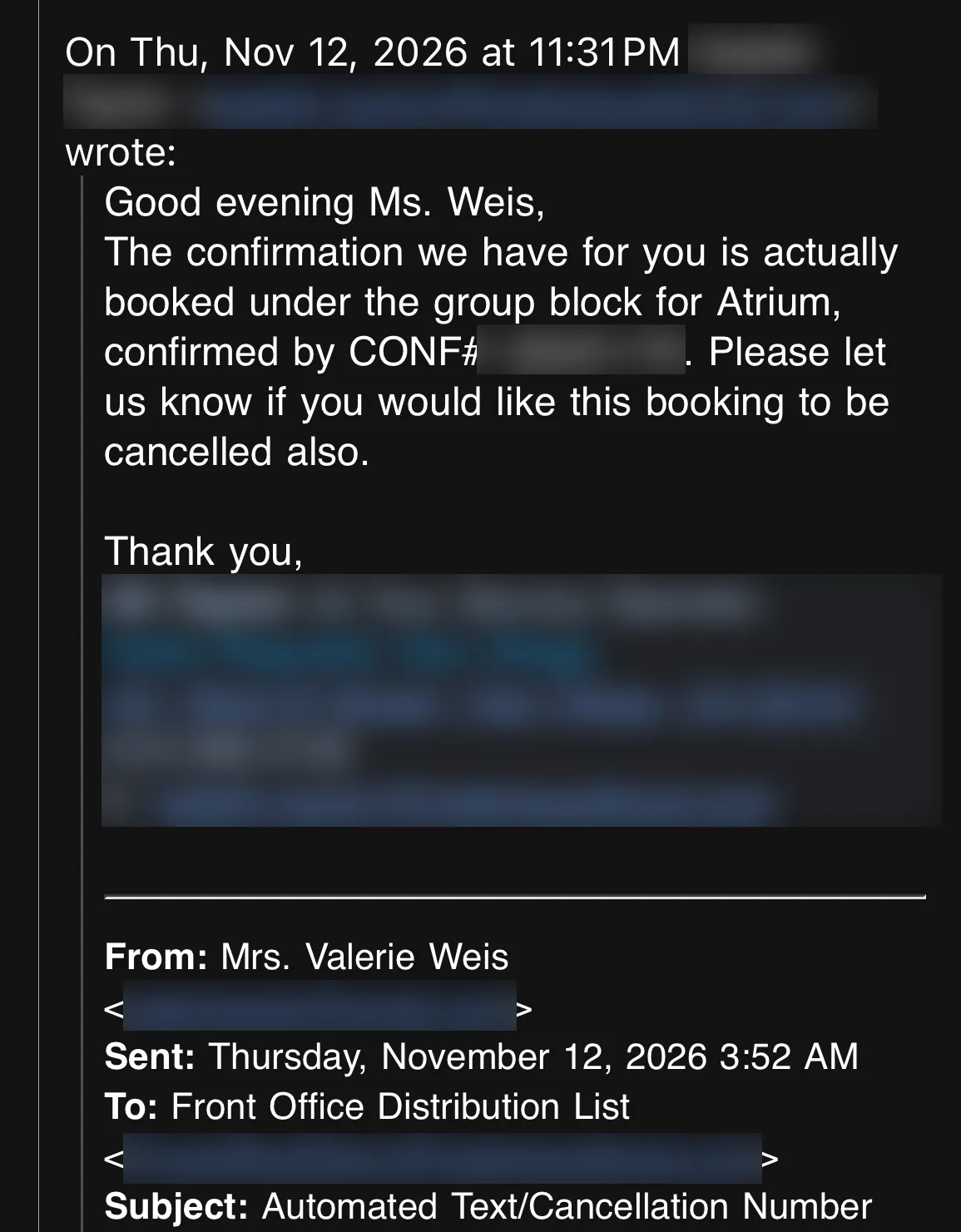
That night, an email arrived. It politely pointed out that my work trip was booked under the company’s group block and asked if I’d like that reservation canceled too. No, I would not.
Friday morning, the day I was supposedly checking in, the hotel let me know they “cannot wait to welcome” me. They also invited me to join their loyalty program. I’ve spent more than 80 nights with the brand this year alone.
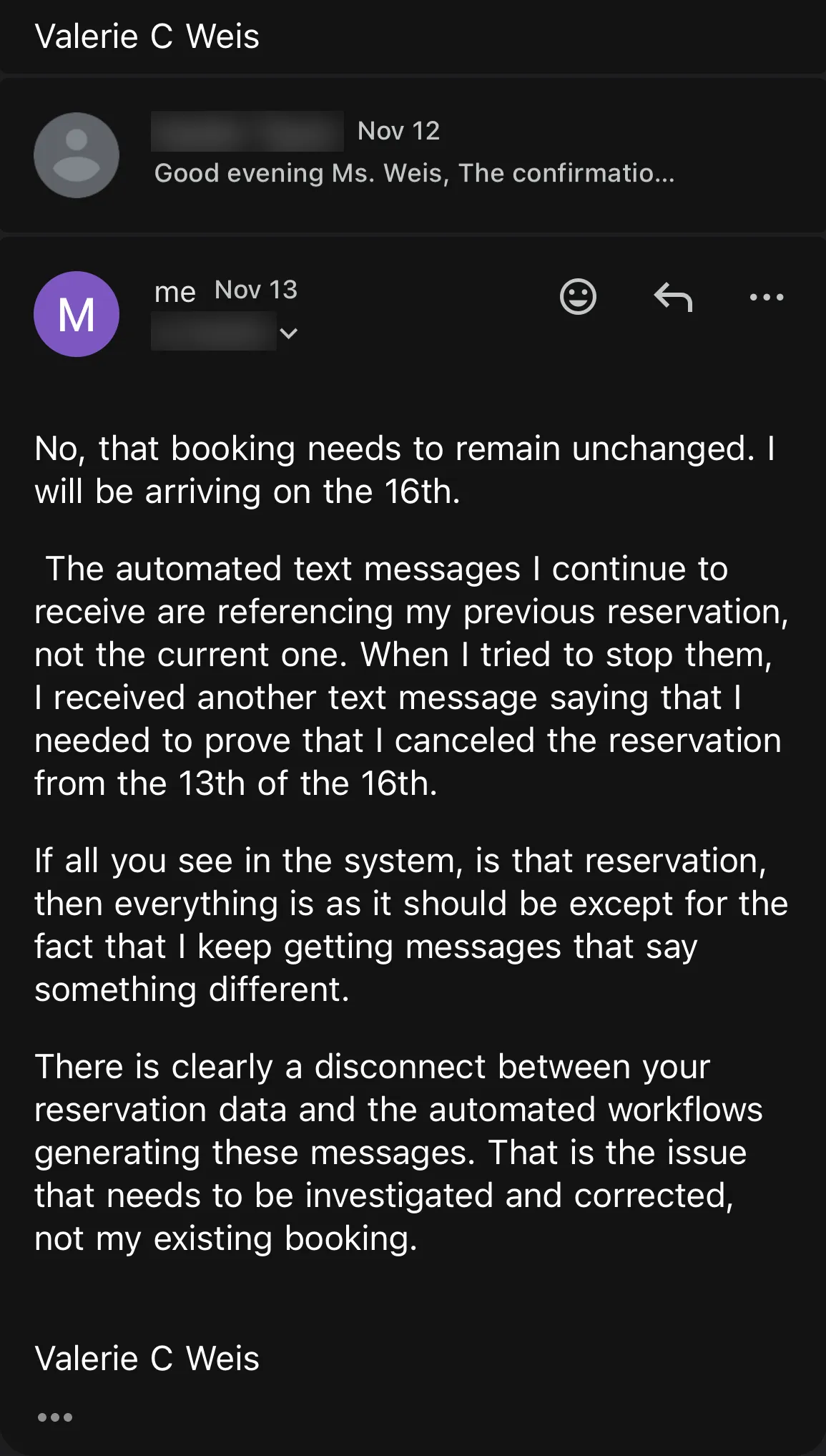
I replied to the email: keep my booking, and please fix the disconnect between your reservation data and the workflows sending these messages. I’m still waiting on a reply.
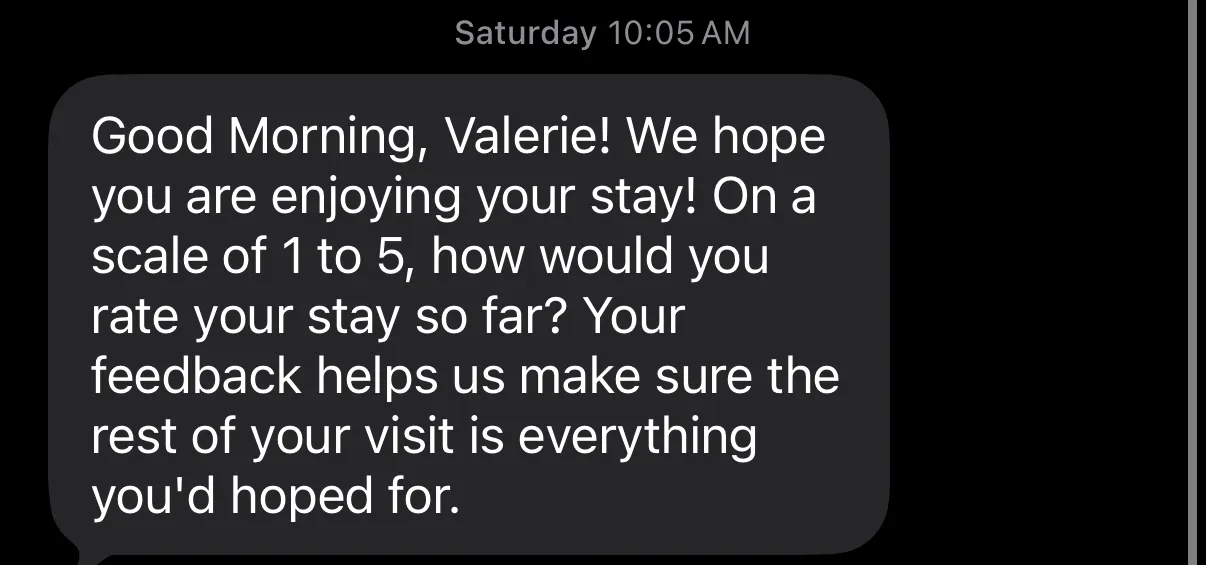
Then, on Saturday, a cheerful check-in text asked me to rate my stay so far on a scale of 1 to 5. I was still in Indiana. Four days in, and two days after I’d told them about the problem, their automated customer journey was still moving me through a stay I’d canceled weeks earlier.
In person, they got everything right
When I finally arrived on Monday, the experience was flawless. The front desk stamped and mailed a postcard I wrote to my kids. The maintenance man chatted with me the whole 19-floor elevator ride down. And they remembered my preferences, tucking me away on a high floor at the end of the hall, far from the ice machine and the elevator.
That contrast is the whole lesson. My room preferences are static data. They were set once and rarely change, so every system had them right. A cancellation is different. It’s a change, and a change only works if it reaches every system that acts on it, in time to matter.
They know me, and that’s why I go out of my way to stay loyal to the brand. A few misfired texts aren’t going to change that. But they show how easily it could happen when the systems behind the experience aren’t connected. To be clear, I’m all for automation and AI. I just want the architecture underneath it to be right.
The people at the hotel fixed what the systems broke. But most customers never reach a person. They get the text, the email and the survey, and they decide what kind of company you are from those.
Banks have the same disconnect, and more is at stake
I spent 16 years inside a bank before moving into consulting, so I know how easily this can happen from both sides of the table. Picture a borrower who works out a payment deferral with their banker, and the automated past-due reminders keep coming anyway. Or a customer being asked to send proof that a loan they already paid off is closed. When the customer has to prove what your system should already know, you’ve handed them your job.
None of this happens because the bank doesn’t care. It happens because one system knows something and another one doesn’t. The core has the change. The marketing platform never heard about it. The banker who knew the whole story was standing in the branch, not sitting in the workflow.
In a hotel, that costs a few eye rolls and a LinkedIn post. In financial services, it costs trust. A customer quietly decides whether you actually know them, and whether they want you handling their money.
AI agents are only as good as the data they can reach
The data doesn’t have to be perfect before you start. It never will be, and waiting for perfect is its own mistake. But an agent can only act on what it can see. Whether it’s Agentforce or another AI agent, it needs a connected view of the customer, which is the job Data 360 (formerly Data Cloud) was built for.
Speed matters as much as the connection. A cancellation that syncs overnight is fine for a monthly report. It does nothing for a text that fires at noon. If the change hasn’t reached the system the agent reads from, the agent won’t hesitate. It will be confident and wrong, for thousands of customers at once instead of one.
There’s a second lesson here. I corrected the hotel twice, and the person on the other end understood both times. My correction still never made it back into the journey. When a customer tells you something changed, it has to update the record, not just the conversation.
Start with the moments that change the relationship
Pick one moment that changes the customer relationship, like a loan payoff, an address change or a closed account. Then trace it. Where does the change get recorded first? Which systems need to hear about it, and how fast? Which messages or agents should stop, start or change because of it? And when a customer corrects you, does that correction reach all of them?
You’ll find the gaps quickly. Most of them have nothing to do with AI. They’re connections that never had to be urgent, because a person was usually there to catch the miss.
At Atrium, this is where we start, before an agent ever goes live. We map the customer moments that matter most and trace each one from the system of record to every message and agent it touches, across Salesforce and the rest of the stack. We decide with our clients how fast each update has to land, real time for anything a customer sees next and overnight for reporting, then design the path to get it there. Finally, we test the agent against those same moments, so its first cancellation isn’t with a real customer.
My hotel has great people, and I’d happily stay there again. But I’ll remember those texts as long as I remember the service. Your customers will too.